The Worldwide Network of US Military Bases
The Global Deployment of US Military Personnel
Region: USA
Theme: US NATO War Agenda
2869
230
330
74.3K

Global Research Editor’s Note
This important analysis and review of US military might by
distinguished Canadian geographer Professor Jules Dufour and CRG
Research Associate was first published by Global Research in 2007.
US military presence expanded around the World has expanded
dramatically in the course of the last five years. This study is
largely based on data for the period 2001-2005.
* *
The Worldwide control of humanity’s economic, social and
political activities is under the helm of US corporate and military
power. Underlying this process are various schemes of direct and
indirect military intervention. These US sponsored strategies ultimately
consist in a process of global subordination.
Where is the Threat?
Where is the Threat?
The 2000 Global Report published in 1980 had outlined “the State of
the World” by focusing on so-called “level of threats” which might
negatively influence or undermine US interests.
Twenty years later, US strategists, in an attempt to justify their
military interventions in different parts of the World, have
conceptualized the greatest fraud in US history, namely “the Global War
on Terrorism” (GWOT). The latter, using a fabricated pretext
constitutes a global war against all those who oppose US hegemony. A
modern form of slavery, instrumented through militarization and the
“free market” has unfolded.
Major elements of the conquest and world domination strategy by the US refer to:
1) the control of the world economy and its financial markets,
2) the taking over of all natural resources (primary resources and nonrenewable sources of energy). The latter constitute the cornerstone of US power through the activities of its multinational corporations.
Geopolitical Outreach: Network of Military Bases
The US has established its control over 191 governments which are
members of the United Nations. The conquest, occupation and/or otherwise
supervision of these various regions of the World is supported by an
integrated network of military bases and installations which covers the
entire Planet (Continents, Oceans and Outer Space). All this pertains to
the workings of an extensive Empire, the exact dimensions of which are
not always easy to ascertain.
Known and documented from information in the public domaine including
Annual Reports of the US Congress, we have a fairly good understanding
of the strucuture of US military expenditure, the network of US military
bases and the shape of this US military-strategic configuration in
different regions of the World.
The objective of this article is to build a summary profile of the
World network of military bases, which are under the jurisdiction
and/or control of the US. The spatial distribution of these military
bases will be examined together with an analysis of the multibillion
dollar annual cost of their activities.
In a second section of this article, Worldwide popular resistance
movements directed against US military bases and their various projects
will be outlined. In a further article we plan to analyze the military
networks of other major nuclear superpowers including the United
Kingdom, France and Russia.
I. The Military Bases
Military bases are conceived for training purposes, preparation and
stockage of military equipment, used by national armies throughout the
World. They are not very well known in view of the fact that they are
not open to the public at large. Even though they take on different
shapes, according to the military function for which they were
established; they can broadly be classified under four main categories :
a) Air Force Bases (see photos 1 and 2);
b) Army or Land Bases;
c) Navy Bases and
d) Communication and Spy Bases.
Photo 1. Air Base of Diego Garcia located in the Indian Ocean
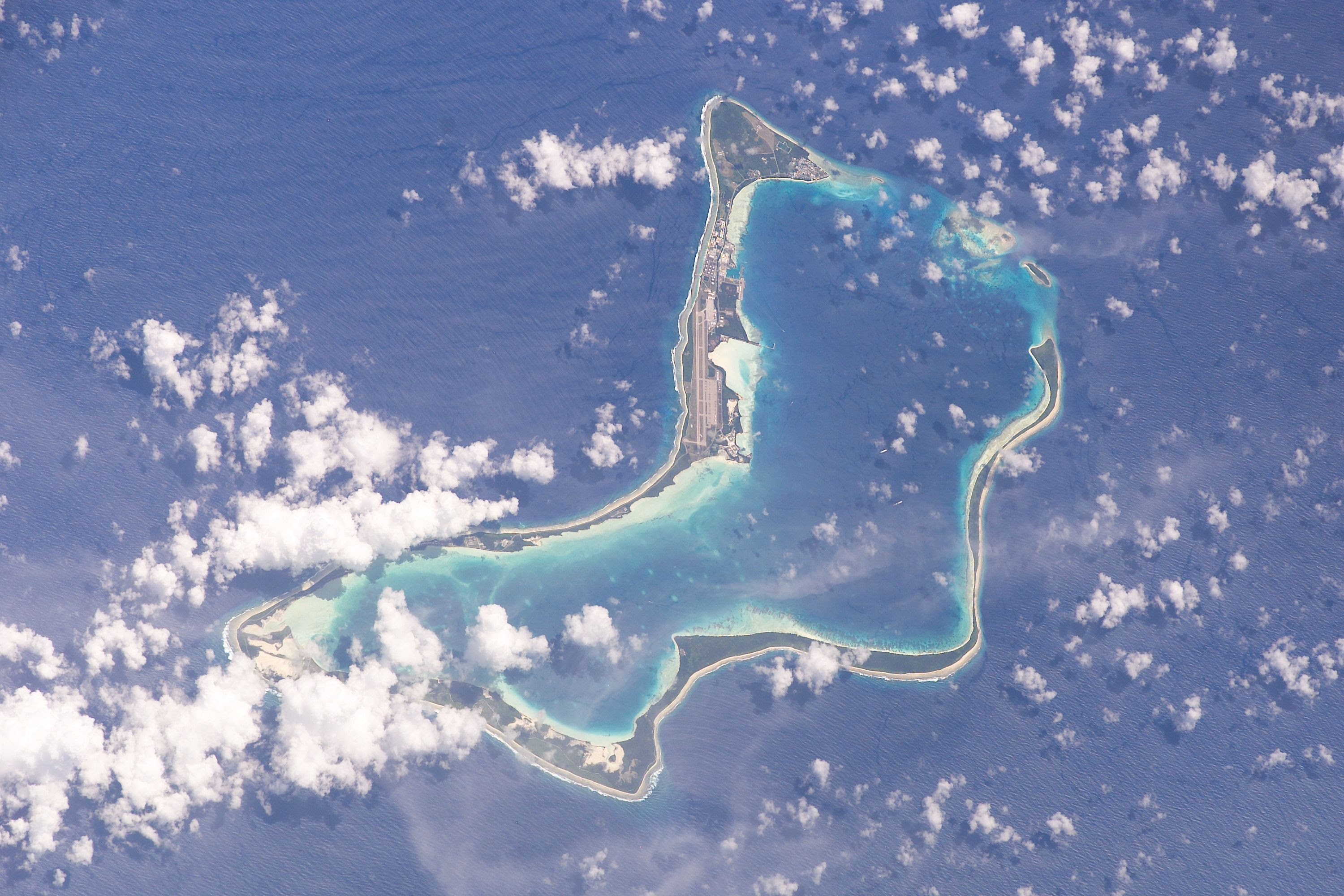
Photo 2. Diego Garcia. An Aerial View of two B-52 and six Kc-a135

II. More than 1000 US Bases and/or Military Installations
The main sources of information on these military installations
(e.g. C. Johnson, the NATO Watch Committee, the International Network
for the Abolition of Foreign Military Bases) reveal that the US operates
and/or controls between 700 and 800 military bases Worldwide.
In this regard, Hugh d’Andrade and Bob Wing’s 2002 Map 1 entitled “U.S. Military Troops and Bases around the World, The Cost of ‘Permanent War’”, confirms the presence of US military personnel in 156 countries.
The US Military has bases in 63 countries. Brand new military bases have been built since September 11, 2001 in seven countries.
In total, there are 255,065 US military personnel deployed Worldwide.
These facilities include a total of 845,441 different buildings and
equipments. The underlying land surface is of the order of 30
million acres. According to Gelman, who examined 2005 official Pentagon
data, the US is thought to own a total of 737 bases in foreign lands.
Adding to the bases inside U.S. territory, the total land area occupied
by US military bases domestically within the US and internationally is
of the order of 2,202,735 hectares, which makes the Pentagon one of the
largest landowners worldwide (Gelman, J., 2007).
Map 1. U.S. Military Troops and Bases around the World. The Cost of «Permanent War» and Some Comparative Data
Map 2. The American Military Bases Around the World (2001-2003)

Source : http://www.nobases.org
Map 3 US Military Bases Click here to see Map 3
The Map of the World Network “No Bases” (Map 3) reveals the following:
Based on a selective examination of military bases in North America,
Latin America, Western Europe, the Middle East, Central Asia, Indonesia,
the Philippines and Japan, several of these military bases are being
used for intelligence purposes. New selected sites are Spy Bases
and Satellite-related Spy Bases.
The Surface of the Earth is Structured as a Wide Battlefield
These military bases and installations of various kinds are distributed according to a Command structure divided up into five spatial units and four unified Combatant Commands (Map 4). Each unit is under the Command of a General.
These military bases and installations of various kinds are distributed according to a Command structure divided up into five spatial units and four unified Combatant Commands (Map 4). Each unit is under the Command of a General.
The Earth surface is being conceived as a wide battlefield which can be patrolled or steadfastly supervised from the Bases.
Map 4. The World and Territories Under the Responsibility of a Combatant Command or Under a Command Structure

Territories under a Command are: the Northern Command (NORTHCOM)
(Peterson Air Force Base, Colorado), the Pacific Command (Honolulu,
Hawaii), the Southern Command (Miami, Florida – Map 5), The Central
Command (CENTCOM) (MacDill Air Force Base, Florida), the European
Command (Stuttgart-Vaihingen, Germany), the Joint Forces Command
(Norfolk, Virginia), the Special Operations Command (MacDill Air Force
Base, Florida), the Transportation Command (Scott Air Force Base,
Illinois) and the Strategic Command (STRATCOM) (Offutt Air Force Base,
Nebraska).
Map 5. The Southern Command

NATO Military Bases
The Atlantic Alliance (NATO) has its own Network of military bases,
thirty in total. The latter are primarily located in Western Europe:
Whiteman, U.S.A., Fairford,
Lakenheath and Mildenhall in United Kingdom,
Eindhoven in Netherlands,
Brüggen, Geilenkirchen, Landsberg, Ramstein, Spangdahlem, Rhein-Main in Germany,
Istres and Avord in France.
Morón de la Frontera and Rota in Spain,
Brescia, Vicenza, Piacenza, Aviano, Istrana, Trapani, Ancora, Pratica di Mare, Amendola, Sigonella, Gioia dell Colle, Grazzanise and Brindisi in Italy,
Tirana in Albania,
Incirlik in Turkey,
Eskan Village in Soudi Arabia and
Ali al Salem in Koweit (http://www.terra.es/
Lakenheath and Mildenhall in United Kingdom,
Eindhoven in Netherlands,
Brüggen, Geilenkirchen, Landsberg, Ramstein, Spangdahlem, Rhein-Main in Germany,
Istres and Avord in France.
Morón de la Frontera and Rota in Spain,
Brescia, Vicenza, Piacenza, Aviano, Istrana, Trapani, Ancora, Pratica di Mare, Amendola, Sigonella, Gioia dell Colle, Grazzanise and Brindisi in Italy,
Tirana in Albania,
Incirlik in Turkey,
Eskan Village in Soudi Arabia and
Ali al Salem in Koweit (http://www.terra.es/
III. The Global Deployment of US Military Personnel
There are 6000 military bases and/ or military warehouses located in the U.S. (See Wikipedia, February 2007).
Total Military Personnel is of the order of 1,4 million of which 1,168,195 are in the U.S and US overseas territories.
Taking figures from the same source, there are 325,000 US military personnel in foreign countries:
800 in Africa,
97,000 in Asia (excluding the Middle East and Central Asia),
40,258 in South Korea,
40,045 in Japan,
491 at the Diego Garcia Base in the Indian Ocean,
100 in the Philippines, 196 in Singapore,
113 in Thailand,
200 in Australia,
and 16,601 Afloat.
97,000 in Asia (excluding the Middle East and Central Asia),
40,258 in South Korea,
40,045 in Japan,
491 at the Diego Garcia Base in the Indian Ocean,
100 in the Philippines, 196 in Singapore,
113 in Thailand,
200 in Australia,
and 16,601 Afloat.
In Europe, there are 116,000 US military personnel including 75,603 who are stationed in Germany.
In Central Asia about 1,000 are stationed at the Ganci (Manas) Air
Base in Kyrgyzstan and 38 are located at Kritsanisi, in Georgia, with a
mission to train Georgian soldiers.
In the Middle East (excludng the Iraq war theater) there are 6,000 US
military personnel, 3,432 of whom are in Qatar and 1,496 in Bahrain.
In the Western Hemisphere, excluding the U.S. and US territories,
there are 700 military personnel in Guantanamo, 413 in Honduras and 147
in Canada.
Map 3 provides information regarding military personnel on duty,
based on a regional categorization (broad regions of the world). The
total number of military personnel at home in the U.S. and/or in US
Territories is 1,139,034. There are 1,825 in Europe 114, 660, 682
in Subsaharian Africa, 4, 274 in the Middle East and Southern Asia, 143
in the Ex-USSR, and 89,846 in the Pacific.
IV. The Operational Cost of the Worldwide Military Network
US defense spending (excluding the costs of the Iraq war) have
increased from 404 in 2001 to 626 billion dollars in 2007 according to
data from the Washington based Center for Arms Control and
Non-Proliferation. US defense spending is expected to reach 640 billion
dollars in 2008.
(Figure 1 and http://www.armscontrolcenter.
These 2006 expenses correspond to 3.7% of the US GDP and $935.64 per capita (http://en.wikipedia.org/wiki/
Figure 1. U.S. Military Expenditures since 1998

According to Fig 1, the 396 billion dollars military budget proposed
in 2003 has in fact reached 417.4 billion dollars, a 73% increase
compared to 2000 (289 billion dollars). This outlay for 2003 was more
than half of the total of the US discretionary budget.
Since 2003, these military expenditures have to be added to those of
the Iraq war and occupation The latter reached in March 2007, according
to the National Priorities Project, a cumulative total of 413 billion
dollars.
Estimates of the Defense Department budget needs, made public in 2006
in the DoD Green Book for FY 2007 are of the order of 440 billion
dollars.
(http://www.dod.mil/
(http://www.dod.mil/
Military and other staff required numbered 1,332,300. But those
figures do not include the money required for the “Global World on
Terrorism” (GWOT). In other words, these figures largely pertain to the
regular Defense budget.
A Goldstein of the Washington Post, within the framework of an
article on the aspects of the National 2007 budget titled «2007 Budget
Favors Defense», wrote about this topic:
“Overall, the budget for the 2007 fiscal year would further reshape
the government in the way the administration has been striving to during
the past half-decade: building up military capacity and defenses
against terrorist threats on U.S. soil, while restraining expenditures
for many domestic areas, from education programs to train service”
V. US Military Bases to Protect Strategic Energy Resources
In the wake of 9/11, Washington initiated its ”Global War on
Terrorism” (GWOT), first in Afghanistan and then in Iraq. Other
countries, which were not faithfully obeying Washington’s directives
including Iran, North Korea, Syria and Venezuela have been earmarked for
possible US military intervention.
Washington keeps a close eye on countries opposed to US corporate
control over their resources. Washington also targets countries where
there are popular resistance movements directed against US interests,
particularly in South America. In this context, President Bush made a
quick tour to Brazil, Uruguay, Colombia, Guatemala and Mexico «to
promote democracy and trade» but also with a view to ultimately curbing
and restraining popular dissent to the US interests in the region. .
The same broad approach is being applied in Central Asia. According
to Iraklis Tsavdaridis, Secretary of the World Peace Council (WPC):
“The establishment of U.S. military bases should not of course be
seen simply in terms of direct military ends. They are always used to
promote the economic and political objectives of U.S. capitalism. For
example, U.S. corporations and the U.S. government have been eager for
some time to build a secure corridor for US.-controlled oil and natural
gas pipelines from the Caspian Sea in Central Asia through Afghanistan
and Pakistan to the Arabian Sea. This region -has more than 6 percent of
the world’s proven oil reserves and almost 40 percent of its gas
reserves. The war in Afghanistan and the creation of U.S. military Bases
in Central Asia are viewed as a key opportunity to make such pipelines a
reality.”
The US. are at War in Afghanistan and Iraq. They pursue these
military operations until they reach their objective which they call
“VICTORY”. According to Wikipedia (http://en.wikipedia.org/wiki/
Map 6. Petroleum and International Theatre of War in the Middle East and Central Asia

Source : Eric Waddell, The Battle for Oil, Global Research, 2003
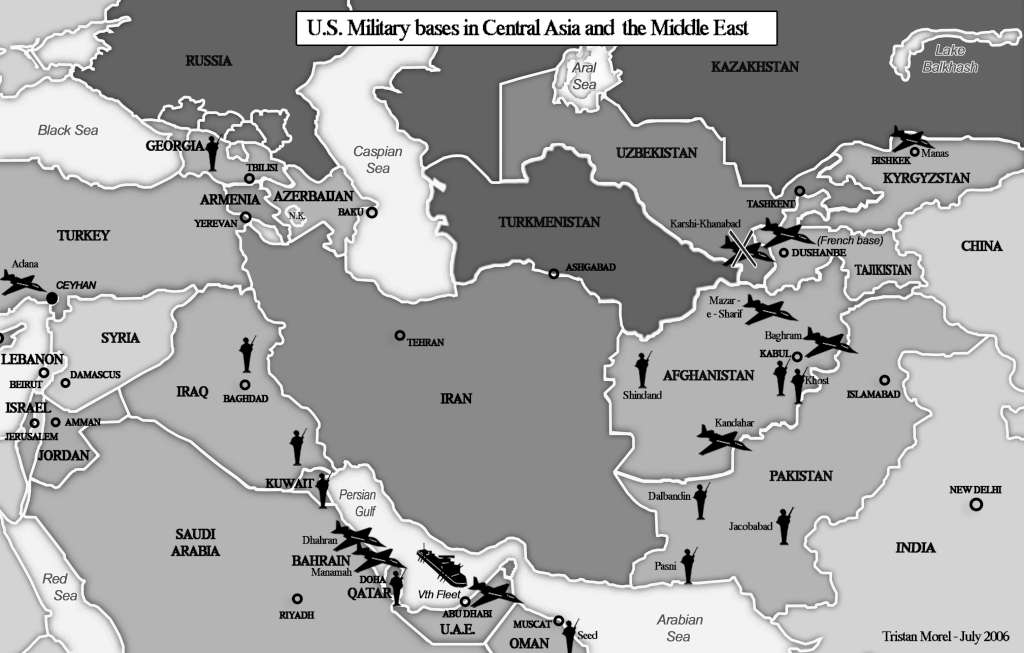
Map 7. American Bases Located in Central Asia
Source : http://www.heartland.it/
Map 8. Oil Fields in Latin America

VI. Military Bases Used for the Control of Strategic Renewable Resources
US Military Bases in foreign countries, are mainly located in Western
Europe: 26 of them are in Germany, 8, in Great Britain, and 8 in Italy.
There are nine military installations in Japan (Wikepedia).
In the last few years, in the context of the GWOT, the US haa built 14 new bases in and around the Persian Gulf.
It is also involved in construction and/or or reinforcement of 20
bases (106 structured units as a whole) in Iraq, with costs of the
order of 1.1 billion dollars in that country alone (Varea, 2007) and the
use of about ten bases in Central Asia.
The US has also undertaken continued negotiations with several
countries to install, buy, enlarge or rent an addional number of
military bases. The latter pertain inter alia to installations in
Morocco, Algeria, Mali, Ghana, Brazil and Australia (See Nicholson, B.,
2007), Poland, Czech Republic (Traynor, I., 2007), Ouzbekistan,
Tadjikistan, Kirghizstan, Italy (Jucca, L., 2007) and France.
Washington has signed an agreement to build a military base in
Djibouti (Manfredi, E., 2007). All these initiatives are a part of an
overall plan to install a series of military bases geographically
located in a West-East corridor extending from Colombia in South
America, to North Africa, the Near East, Central Asia and as far as the
Philippines (Johnson, C., 2004). The US bases in South American are
related to the control and access to the extensive natural biological ,
mineral and water resources resources of the Amazon Basin. (Delgado
Jara, D., 2006 and Maps 9 and 10).
Map 9. The Biological Wealth of Latin America

Map 10. Freshwater Resources in Latin America

VII. Resistance Movements
The network of US military bases is strategic, located in prcximity
of traditional strategic resources including nonrenewable sources of
energy. This military presence has brought about political opposition
and resistance from progressive movements and antiwar activists.
Demonstrations directed against US military presence has developed
in Spain, Ecuador, Italy, Paraguay, Uzbekistan, Bulgaria and in many
other countries. Moreover, other long-termer resistance movements
directed against US military presence have continued in South Korea,
Puerto Rico, Guam, the Philippines, Cuba, Europe, Japan and other
locations.
The Worldwide resistance to US foreign military bases has grown
during the last few years. We are dealing with an International Network
for the Abolition of US Military Bases.
Such networks’ objective is to broadly pursue
disarmament, demilitarization processes Worldwide as well as dismantle
US military bases in foreign countries.
The NO BASES Network organizes educational campaigns to sensitize
public opinion. It also works to rehabilitate abandoned military sites,
as in the case of Western Europe.
These campaigns, until 2004, had a local and national impact.
The network is now in a position to reach people Worldwide. The
network itself underscores that “much can be gained from greater and
deeper linkages among local and national campaigns and movements across
the globe. Local groups around the world can learn and benefit from
sharing information, experiences, and strategies with each other”
“The realisation that one is not alone in the struggle against
foreign bases is profoundly empowering and motivating. Globally
coordinated actions and campaigns can highlight the reach and scale of
the resistance to foreign military presence around the world. With the
trend of rising miniaturization and resort to the use of force around
the world, there is now an urgent and compelling need to establish and
strengthen an international network of campaigners, organisations, and
movements working with a special and strategic focus on foreign military
presence and ultimately, working towards a lasting and just system of
peace»
The Afghanistan and Iraq wars have, in this regard, created a
favourable momentum, which has contributed to the reinforcement of the
movement to close down US military bases in foreign countries:
“At the time of an International anti-war meeting held in Jakarta in
May 2003, a few weeks after the start of the Iraq invasion, a global
anti-military Bases campaign has been proposed as an action to priorize
among global anti-war, justice and solidarity movements» (http://www.no-bases.org/
Since then, the campaign has acquired greater recognition. E-mail lists have been compiled (nousbases@lists.riseup.net and nousbases-info@lists.riseup.
In addition, the Network is more and more active and participates in
different activities. At the World Social Forums it organized various
conferences and colloquia. It was present at the European Social Forum
held in Paris in 2003 and in London in 2004 as well as at the the
America’s Social Forum in Ecuador in 2004, and at the Mediterranean
Social Forum in Spain in 2005.
One of the major gatherings, which was held in Mumbai, India, in
2004, was within the framework of the World Social Forum. More than 125
participants from 34 countries defined the foundations of a coordinated
global campaign.
Action priorities were identified, such as the determination of a
global day of action aiming at underscoring major issues stemming from
the existence of US military bases. The Network also held four
discussion sessions at the Porto Alegre Social Forum in 2005. One of
those pertained to the financing of the Network’s activities.
It is important to recall that the Network belongs to the Global
Peace Movement. Justice and Peace organizations have become more
sensitized on what was at stake regarding US military bases.
.
Map 11. Social and Resistence Movements in Latin America

The Quito and Manta International Conference, Ecuador, March 2007
A Network World Conference for the Abolition of Foreign Military
Bases was held at Quito and at Manta, Ecuador, from March 5 to 9 2007
The objective of the Conference was to underscore the political,
social, environmental and economic impacts of US military bases, to make
known the principles of the various Anti-Bases movements and to
formally build the Network, its strategies, structure and Action Plans.
The main objectives of the Conference were the following:
- Analyze the role of Foreign Military Bases and other
features of military presence associated to the global dominance
strategy and their impacts upon population and environment;
- Share experiences and reinforce the built solidarity
resulting from the resistance battles against Foreign military Bases
around the World;
- Reach a consensus on objectives mechanisms, on action
plans, on coordination, on communication and on decision making of a
Global Network for the abolition of all Foreign military Bases and of
all other expressions of military presence; and
- Establish global action plans to fight and reinforce the
resistance of local people and ensure that these actions are being
coordinated at the international level.
Conclusion
This article has focussed on the Worldwide development of US military power.
The US tends to view the Earth surface as a vast territory to
conquer, occupy and exploit. The fact that the US Military splits the
World up into geographic command units vividly illustrates this
underlying geopolitical reality.
Humanity is being controlled and enslaved by this Network of US military bases. .
The ongoing re-deployment of US troops and military bases has to be
analyzed in a thorough manner if we wish to understand the nature of US
interventionism in different regions of the World.
This militarization process is characterized by armed aggression and
warfare, as well as interventions called “cooperation agreements”. The
latter reaffirmed America’s economic design design in the areas of trade
and investment practices. Economic development is ensured through the
miniaturization or the control of governments and organizations. Vast
resources are thereby expended and wasted in order to allow such control
to be effective, particularly in regions which have a strategic
potential in terms of wealth and resources and which are being used to
consolidate the Empire’s structures and functions.
The setting up of the International Network for the Abolition of
Foreign Military Bases turns out to be an extraordinary means to oppose
the miniaturization process of the Planet. Such Network is indispensable
and its growth depends on a commitment of all the People of the World.
It will be extremely difficult to mobilize them, but the ties built up
by the Network among its constituent resistance movements are a positive
element, which is ultmately conducive to more cohesive and coordinated
battle at the World level.
The Final Declaration of the Second International Conference against
Foreign Military Bases which was held in Havana in November 2005 and was
endorsed by delegates from 22 countries identifies most of the major
issues, which confront mankind. This Declaration constitutes a major
peace initative. It establishes international solidarity in the process
of disarmament. .
References
COMITÉ DE
SURVEILLANCE OTAN. 2005. Las bases militares : un aspecto de la
estrategia global de la OTAN. Intervencion del Comité Surveillance Otan
en la Conferencia Internacional realizada en La Habana 7-11.11.2005. 9
pages.
DELGADO
JARA, Diego. 2006. Bases de Manta, Plan Colombia y dominio de la
Amazonia. Militarizacion de la Hegemonia de EE. UU. En América latina.
17 pages.
EQUIPO DE COMUNICACIÓN CONFERENCIA NO BASES. 2007. La gente del mundo no quiere bases militares extranjeras.
GELMAN, J. 2007. Terratenientes. Rebelion. 26 de Febrero de 2007, http://www.rebelion.org/
JOHNSON, C., America’s Empire of Bases. January 2004.
JOHNSON, C. America’s Empire of Bases. Janvier 2004 .
JOHNSON, C.
2005. The Sorrows of Empire. Militarism, Secrecy, and the End of the
Republic. Henry Holt, April 2005, Paperback. 389 pages.
JOHNSON, C., 2007.. 737 U.S. Military Bases = Global Empire. February 19, 2007
JUCCA, L., 2007. Italians protest over U.S. base expansion. Sat Feb 17, 2007.
MANFREDI, E. 2007. Djibouti : Hôtel Corne d’Afrique, grande base américaine. Le GRAND SOIR.info. Édition du 23 mars 2007.
NEW INTERNATIONALIST. 2004. The Bases of Resistance, December 2004, Issue 374.
NICHOLSON, B. 2007. Secret New Us Spy base to Get Green Light. February 15, 2 007.
TRAYNOR, I. 2007. US EXPANDS, Builds New Military Bases in Europe. The Guardian, anuary 22, 2007.
TSAVDARIDIS, I., 2005. Military Bases around the world and in Europe – the role of the USA and NATO. Novembre 2005. Stop USA / STOP United States of Agression.
VAREA, C., Las bases Militares de EEUU en Iraq. 4 mai 2006. Nodo50.
Web Sites
An Internet Guide to United States Military Bases Around the World :
APPEL A UN RASSEMBLEMENT INTERNATIONAL en Mars 2007, Équateur, Pour l’abolition de toutes les bases militaires
Campana. Un
mundo sin bases militares . Asemblea de Organizaciones y Movimientos
contra la guerra, la OTAN y el Neoliberalismo (Madrid), Nodo50.
Challenges to the US Empire, http://www.globalpolicy.org/
Washington veut installer une base militaire en Algérie. Le Quotidien d’Oran, 20 juillet 2003.
[Fsmed-general] for all that are against foreign military bases:
http://www.grups.pangea.org/
http://www.grups.pangea.org/
FUENTES DE AGUA EN AMÉRICA LATINA :
http://www.
http://www.
Abdulhafeth Khrisat, Impérialisme américain et politique militaire, , Université Mu’tah
Interview with Chalmers Johnson, Part 1. An Empire of More Than 725 Military Bases.
Military Bases Around The World, http://www.fsmitha.com/com/
Military
Bases around the world and in Europe – the role of the USA and NATO ,
Iraklis Tsavdaridis, Secretary of the World Peace Council (WPC) 8th
November 2005, From the Greek Committee for International Detente and
Peace (EEDYE), Presented on November 8, 2005 at the International
Conference on Foreign Military Bases in Havana/Cuba organized by MOVPAZ :
Military of the United States : http://en.wikipedia.org/wiki/
No a la instalacion de una base de la OTAN en Zaragoza :
http://www.
http://www.
OTAN – Le grand jeu des bases militaires en terre européenne :
Protestas contra bases militares de EEUU en Espana :
http://spanish.peopledaily.
http://spanish.peopledaily.
US Military Troops and Bases Around the World :
http://www.globalpolicy.org/
http://www.globalpolicy.org/
U.S. Military Troops and Bases Around the World /united for peace & justice:
http://www.unitedforpeace.org/
http://www.unitedforpeace.org/
YACIMIENTOS PETROLEROS EN AMÉRICA LATINA :
http://www.
http://www.
Jules Dufour
is President of the United Nations Association of Canada (UNA-C) –
Saguenay-Lac-Saint-Jean branch and Research Associate at the Centre for
Research on Globalization (CRG). He is Emeritus Professor of Geography
at the University of Quebec, Chicoutimi.
In 2007, Professor Jules Dufour became Chevalier de l’Ordre national du Québec,
a distinction conferred by the Quebec government, for his contributions
to World peace and human rights, his numerous scholarly writings and
the work he accomplished in the context of national and international
commissions on issues pertaining to regional development, human rights
and the protection of the environment.
Translated from the French, first published on Global Research’s French language website: www.mondialisation.ca
Article in French, 10 avril 2007.
Article in French, 10 avril 2007.


No comments:
Post a Comment