Revealed: how Google enlisted members of US Congress it bankrolled to fight $6bn EU antitrust case
US tech firm has stepped up lobbying efforts with $3.5m charm
offensive to persuade EU to drop punitive action over alleged abuse of
monopoly position

The coordinated effort by senators and members of the House of Representatives, as well as by a congressional committee, formed part of a sophisticated, multimillion-pound lobbying drive in Brussels, which Google has significantly ramped up as it fends off challenges to its dominance in Europe.
An investigation by the Guardian into Google’s multifaceted lobbying campaign in Europe has uncovered fresh details of its activities and methods. Based on documents obtained under a freedom of information request and a series of interviews with EU officials, MEPs and Brussels lobbyists, the investigation has also found:
• Google’s co-founder and CEO Larry Page met the then European commission chief privately in California in spring 2014 and raised the antitrust case despite being warned by EU officials that it would be inappropriate to do so.
• Officials and lawmakers in Brussels say they have witnessed a significant expansion of Google lobbying efforts over the past 18 months as the company faces increased scrutiny of its business activities in Europe.
• Google has employed several former EU
officials as in-house lobbyists, and has funded European thinktanks and
university research favourable to its position as part of its broader
campaign.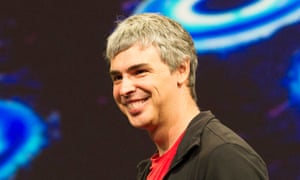
Republican and Democratic senators and congressmen, many of whom have received significant campaign donations from Google totalling hundreds of thousands of dollars, leaned on parliament in a series of similar – and in some cases identical – letters sent to key MEPs.
Google has consistently donated to Goodlatte’s election campaigns, while members on the judiciary committee that he chairs collectively received more than $200,000 (£133,000) from the company during the 2014 election cycle.
Google declined to comment on the letters or its ties to the committee, including the fact one of its senior lawyers in Washington had joined the firm straight from the judiciary committee where he served as an antitrust counsel to its Republican members. A spokeswoman for the committee did not respond to the Guardian’s requests for comment.
Scaling up
Google’s expansion of its lobbying activities in Brussels has come in response to a growing number of threats to its business in the EU, where it dominates about 90% of the search market. It argues that its rivals lobby just as hard against it, if not harder.In April, a long-running antitrust investigation came to a head when the newly installed EU competition commissioner, Margrethe Vestager, formally accused Google of abusing its market dominance by systematically favouring its shopping price-comparison service.

The European commission has also launched a separate competition investigation into Google’s mobile operating system, Android, and indicated additional inquiries are being considered. This follows the symbolic blow MEPs dealt the US company late last year with the so-called “unbundling” resolution.
Under pressure to defend itself, Google has opened its cheque book. Last year, the company spent more than twice as much on lobbying in Brussels than Apple, Facebook, Yahoo, Twitter and Uber combined. Yet Google is still being outspent by Microsoft, which some in Brussels suspect is backing a vocal anti-Google lobby in Brussels. Microsoft declined to comment.
Official transparency data shows Google has increased its annual lobbying spending from €600,000 in 2011 to almost €4m last year. In addition to its team of in-house lobbyists – many of whom have come from jobs in the commission or the European parliament – the company has employed eight European lobbying firms.
This strategy is borne out by records of meetings with the commission. Between December 2014 and June 2015, Google held more high-level meetings with commission officials than any other company.
Google sympathisers accept it is lobbying hard, but suggest no
company would sit back and not ensure its side of the story is being
heard when so much is at stake, especially when claimants in the
antitrust case have formed well-funded lobby groups to fight the firm.
Latest data shows ICOMP spent €400,000 on lobbying in Brussels between 2013-14. It does not disclose how much it spent on legal costs incurred in connection with the case against Google.
One senior EU official speaking on condition of anonymity said Google’s lobbying in Brussels stood out because of the intricate, often subtle yet powerful mechanisms it employs.
“What is striking is the comprehensive and strategic approach they have. They are not only doing PR but they are doing everything. They are using proxies, which is much more powerful than just the usual stuff,” he told the Guardian.
For instance, as part of its broader public affairs programme, Google has paid for academic research supportive of its public policy objectives, through its funding of work at prestigious European universities and leading Brussels thinktanks, including the Centre for European Policy Studies (CEPS) and the Bruegel Institute.
A spokesman for the US tech firm said European politicians had “many questions for Google and about the internet”. To help answer those questions, he added, Google sometimes commissioned independent research, but always asked the academics to disclose funding they received from the company.
Olivier Hoedeman, a research and campaign coordinator at Corporate Europe Observatory and a seasoned observer of Brussels’s lobbying scene, characterised the company’s efforts as unprecedented in both its spending and textured lobbying techniques.
“Google has in an unprecedented manner stepped up their Brussels lobbying efforts during the last few years, massively increasing their spending on lobbying and on other activities in a very comprehensive and multifaceted lobbying campaign aimed at influencing the European commission’s decisions,” he said.
Among MEPs, this became particularly apparent in November last year when the European parliament voted yes to the motion to break up Google’s search business from its advertising and other businesses.
“At the time of the November parliamentary session, Google’s lobby activity clearly stepped up in a way that we have never seen before,” said Ramon Tremosa, a Spanish MEP from Catalonia involved in putting forward the unbundling resolution.
Tremosa said that during the week of the vote Google’s Brussels-based lobbyists were joined by its public affairs officers for each of the 28 EU-member states in filling the corridors of parliament.
According to Jacques Lafitte, a veteran lobbyist at Avisa Partners whose clients include a complainant in the antitrust case, Google’s lobbying in Brussels is unrivalled.
“Before Google, the most sophisticated company in terms of political influence was Goldman Sachs. But Google beats them any day because contrary to Goldman they don’t just focus on the top,” Lafitte said. “Google makes its influence felt absolutely everywhere.”
High-level interventions
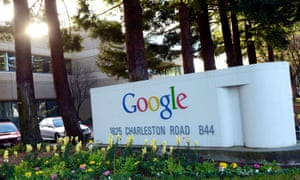
Google’s most senior executives have also played their part in the lobbying drive. In May 2014, with less than six months to persuade the commission to abandon the antitrust action before a change in leadership at Europe’s executive arm, Google co-founder Larry Page met the then commission president, José Manuel Barroso, at the company’s headquarters in Mountain View, California.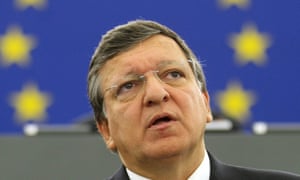
A letter sent by Google’s executive chairman, Eric Schmidt, to Barroso months later shows the case was discussed. Page told Barroso Google could implement a new set of commitments designed to allay fears about European rivals being unable to compete with it. For an hour, the commission president sat and listened.
“We loved having you in Mountain View and I enjoyed our discussion tremendously,” Page later wrote to Barroso. “Next time you’re in the Valley please come and visit again.”
The timing of the meeting, according to Hoederman, was “very awkward” as the European commission was weighing the antitrust case against the company.
“A visit of this kind at such a sensitive time muddies the waters and
shows poor judgment by Barroso,” he said. “It would have been
understandable if the EU’s competition policy officials felt that
Barroso’s visit risked undermining their integrity of the
investigation.”
Julia Reda, a Green MEP from Germany, noted: “This is not the first
time there have been reports of Google trying to influence the outcome
of the commission’s antitrust investigation through high-level
interventions.“As it is difficult to tell what is going on behind closed doors, I am not in a position to judge whether the communication between the commission and Google during this competition inquiry has been atypical, though it certainly raises questions.”
A spokesman for the commission defended its dealings with Google. “In
line with its normal procedures, the commission’s antitrust
investigation into Google’s business practices has been handled in an
open and transparent way,” he said.
In September 2014, with the clocking ticking and less than a month
before Barroso stepped down, Schmidt joined in the lobbying of Barroso,
having previously left the task to Google’s chief in-house lobbyists in
Brussels.
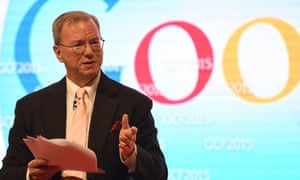
In a last-ditch attempt to change the course of the antitrust case,
Schmidt asked Barroso to lean on his commissioners to approve the
proposed settlement. Calling it a “crucial stage in the process”,
Schmidt warned in pointed language that a failure to approve the
settlement would undermine the commission’s credibility and result in
“drawn-out litigation”.
Less than a week later, the commission reopened the long-running antitrust investigation,
dealing Google a major setback. In a surprise move, it rejected
Google’s third settlement offer following “very, very negative”
responses from complainants to the proposed settlement.
Trouble ahead?
After
changes in leadership at the European commission in November 2014,
Google’s lobbyists in Brussels have become increasingly frustrated.
Documents show the company’s repeated attempts to set up meetings
with senior commission officials including the president, Jean-Claude
Juncker, have thus far been unsuccessful. In one instance, Google
requested a meeting with a senior adviser to Juncker shortly after the
commission formally issued its antitrust case. However, her assistant
bluntly declined the request and directed them to the new competition
commissioner, Vestager.
There is a feeling among some EU officials that Google may have
underestimated the strict legal procedures that dictate how antitrust
cases progress in Europe. However, others say the US firm’s mistake has
more to do with underestimating the influence of an “anti-Google lobby”,
backed by the likes of Microsoft and German media empire Axel Springer.
In the US, Google saw off a potentially damaging antitrust
investigation by the Federal Trade Commission, which dropped its case in
early 2013. But the landscape in Brussels differs from that in
Washington, where Google enjoys more clout and personal connections with
the highest levels of government.
John Simpson, of Consumer Watchdog in the US, believes Google has
been successful at positioning itself in and around the corridors of
power in Washington. “They’re masters at it and it’s worked very, very
well for them,” he said.
But he claims Europe’s acceptance of Google’s size, power and
dominance is less than what it is in the US. “I think there may be a
failure to understand the European perspective on certain issues,” he
said, “I don’t think that they at the core understand how privacy is
viewed as a fundamental right in Europe.”
Alarmingly for Google, its investors are beginning to wake up to the
trouble it faces in Brussels. Scott Kessler, an equity analyst at
S&P Capital IQ who watches Google closely, said many investors had
become apathetic about the charges levelled against the company, but the
mood is beginning to change.
“Google have been facing these issues in Europe for a number of years
and some people believe that now is the time that they will have to
account for some of these actions in some way,” he said.
Once again the clock is ticking for Google. Vestager is treating her investigations as a high priority and EU to Pursue Google Parent Alphabet on Multiple Fronts, Vestager Says EU regulators will actively pursue its new parent company, Alphabet, on multiple fronts.


No comments:
Post a Comment